OG images, typeset at the edge
Social cards as a route that returns a PNG — satori + resvg in the worker, with runtime font subsetting so CJK titles work.
The feature
An og:image should not be a pre-generated file you forget to regenerate — it
is a route. This site serves /og/<slug>.png from the worker for EVERY page
(posts, docs, core pages), and each page's og:image meta tag points at its
own card. This page's, rendered live as you read:
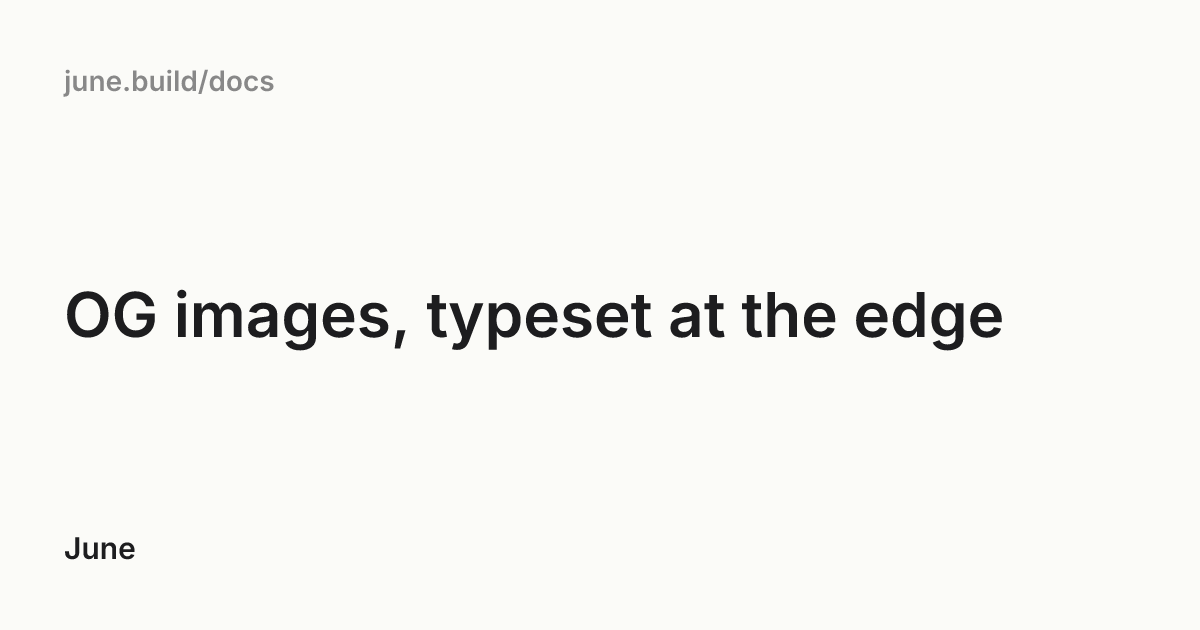
/og/<slug>.png → detect CJK → fetch font subset (text=title) → satori → resvg → PNG
satori lays out JSX inside the V8 isolate; resvg (Rust compiled to WASM) rasterizes it. No browser, no puppeteer fleet — it runs where the rest of your app runs.
The CJK part
Full CJK families (Noto Sans TC / SC / JP / KR) weigh several MB per script —
far too heavy to ship in a worker, and a build can't know the glyph set of a
dynamic title ahead of time. The answer is runtime subsetting via Google
Fonts' text= parameter: download only the glyphs the title actually uses
(a few dozen KB), cache the subset for a week through workerd's Cache API.
Traditional and Simplified Chinese resolve to different fonts; Japanese mixes
kana with its own kanji forms — the detection step picks per title.
The full design walkthrough, with per-script samples, is in Typesetting CJK at the edge.
Try it
curl -o card.png https://june.build/og/2026-06-10-typesetting-cjk-at-the-edge.png
The route lives behind app/_extra.tsx — June's pre-route escape hatch for
responses a page has no projection for yet (binary bodies). One card
definition renders everywhere: workers-og rasterizes it on workerd, satori +
resvg-js rasterize the same JSX on the dev host — so the social card you
preview at localhost:3000/og/… is the one that deploys.
Why it matters
Social cards are the page most teams generate with a headless browser in a cron job. Making them a route means they're always current, deploy with the app, and cost a font subset — not a Chromium.